SMILE Eye Surgical Procedure Uses A Minimally Intrusive Method To Correct Vision, Yet What Are The Possible Dangers And Healing Details You Require To Recognize?


Content Created By-Durham McQueen
If you're taking into consideration vision correction choices, SMILE eye surgical treatment may be on your radar. This ingenious treatment includes creating a tiny lenticule in the cornea to resolve nearsightedness and astigmatism. Unlike traditional LASIK, it's less intrusive and promises quicker recuperation. Nonetheless, while there are substantial advantages, there are likewise dangers involved. Understanding both facets can assist you make an informed choice regarding your eye health. What's the recovery process like, and what should you anticipate?
Recognizing the SMILE Treatment
The SMILE treatment, or Tiny Incision Lenticule Extraction, is a minimally invasive eye surgical procedure developed to correct vision issues like nearsightedness and astigmatism.
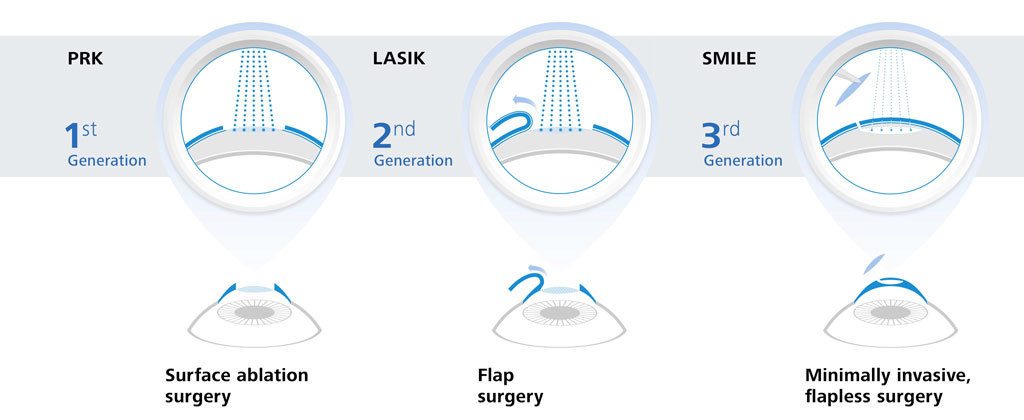
During this procedure, a laser develops a tiny lenticule, or lens-shaped cells, within the cornea. You won't need any kind of stitches, as the little incision permits a quick healing.
The cosmetic surgeon then eliminates the lenticule via this tiny cut, reshaping your cornea to improve your vision. Unlike typical LASIK, SMILE doesn't need the production of a big flap, which can lead to fewer complications.
You'll locate that this strategy is less turbulent to the corneal structure, possibly boosting security. Comprehending the procedure assists you feel a lot more confident as you consider your alternatives for vision correction.
Perks of SMILE Eye Surgery
While considering vision improvement options, you could discover that SMILE eye surgical treatment offers numerous engaging benefits.
First, it's minimally invasive, needing only a little incision, which implies much less disturbance to your eye framework. This causes quicker healing times and much less pain contrasted to typical LASIK.
You'll likewise appreciate its precision; SMILE makes use of sophisticated laser modern technology to reshape the cornea, offering exceptional results for nearsightedness and astigmatism.
In addition, lots of patients report boosted visual top quality, with less instances of glare or halos. Given that there's no requirement for a corneal flap, your eyes remain more secure post-surgery.
Finally, the treatment usually takes simply a few minutes, permitting you to return to your day-to-day activities much faster than with various other methods.
Potential Risks and Healing Process
Although SMILE eye surgical procedure is usually risk-free, it is very important to be knowledgeable about potential threats that can develop during or after the treatment. Some individuals might experience momentary adverse effects like completely dry eyes, glow, or halos around lights.
In rare instances, complications such as infection, vision loss, or the requirement for added surgery can occur.
Recovery usually includes a few days off and avoiding difficult tasks. You must follow your surgeon's post-operative instructions carefully, consisting of using recommended eye decreases and attending follow-up consultations.
Lots of people observe improved vision within a few days, yet full recuperation can take weeks. Remaining patient and providing your eyes time to heal is essential for the best outcome.
Verdict
Finally, SMILE eye surgery offers a modern-day, minimally invasive option for remedying nearsightedness and astigmatism. With related web-site and reduced pain, it's an attractive selection for numerous. Nonetheless, it's necessary to consider the prospective risks versus the advantages. By remaining educated and complying with post-operative treatment, you can maximize your chances of a successful outcome. If https://healthcare.utah.edu/the-scope/shows.php?shows=0_s67swta4 considering this procedure, seek advice from your eye treatment professional to determine if it's right for you.